Every December, A Charlie Brown Christmas shows up and reminds us that nothing has really changed since 1965. We’re still stressed. We’re still distracted. We still think the answer to our problems is buying one more shiny thing. (Maybe painted pink!) And we’re still weirdly confident that if we just try harder, this year will finally feel like Christmas.
Charlie Brown spends the whole special trying to find the meaning of Christmas and getting dunked on by his friends. Lucy wants everything bigger, flashier, and louder. Snoopy turns his doghouse into a Vegas residency. The Christmas play is a hot mess. Everyone’s yelling. Everyone’s overwhelmed.
It’s a lot like the emotional arc of tax season, just with more lights and tinsel. If you’re a business owner or high-income professional, you probably recognize this vibe. December starts with good intentions. Next thing you know, you’re juggling year-end expenses, wondering if you should buy equipment you don’t really need, and asking if it’s too late to do something brilliant with your taxes. Spoiler alert. Sometimes it is. Sometimes it’s not. And sometimes you’re Charlie Brown staring at a sad little tree, wondering where it all went sideways.
That tree gets mocked relentlessly. Too small. Too scrawny. Not festive enough. Which is funny, because it’s the only honest thing in the whole show. It’s not pretending to be something it’s not. In tax land, that tree is your actual financial reality. Not the Instagram version or the neighbor’s version.
A lot of people approach taxes like Lucy approaches the Christmas play. Loud opinions, zero preparation. (It’s funny how she chases the same tax-planning solution as so many other healthcare professionals: real estate.) Others take the Snoopy route. Maximum flair, minimum substance. Big deductions that look exciting but come with audit-sized strings attached. Neither of those ends well. (No, Christmas is not “run by a big eastern syndicate.” But, you know, taxes are!)
Charlie Brown’s breakthrough moment comes when he stops chasing approval and starts what actually matters. That’s the same question we try to answer with planning. Not, “How do we pay the least amount?” Not, “How do we copy whatever trick we heard about at a cocktail party?” But, “How do we line up the tax rules with the life and business we’re actually living?”
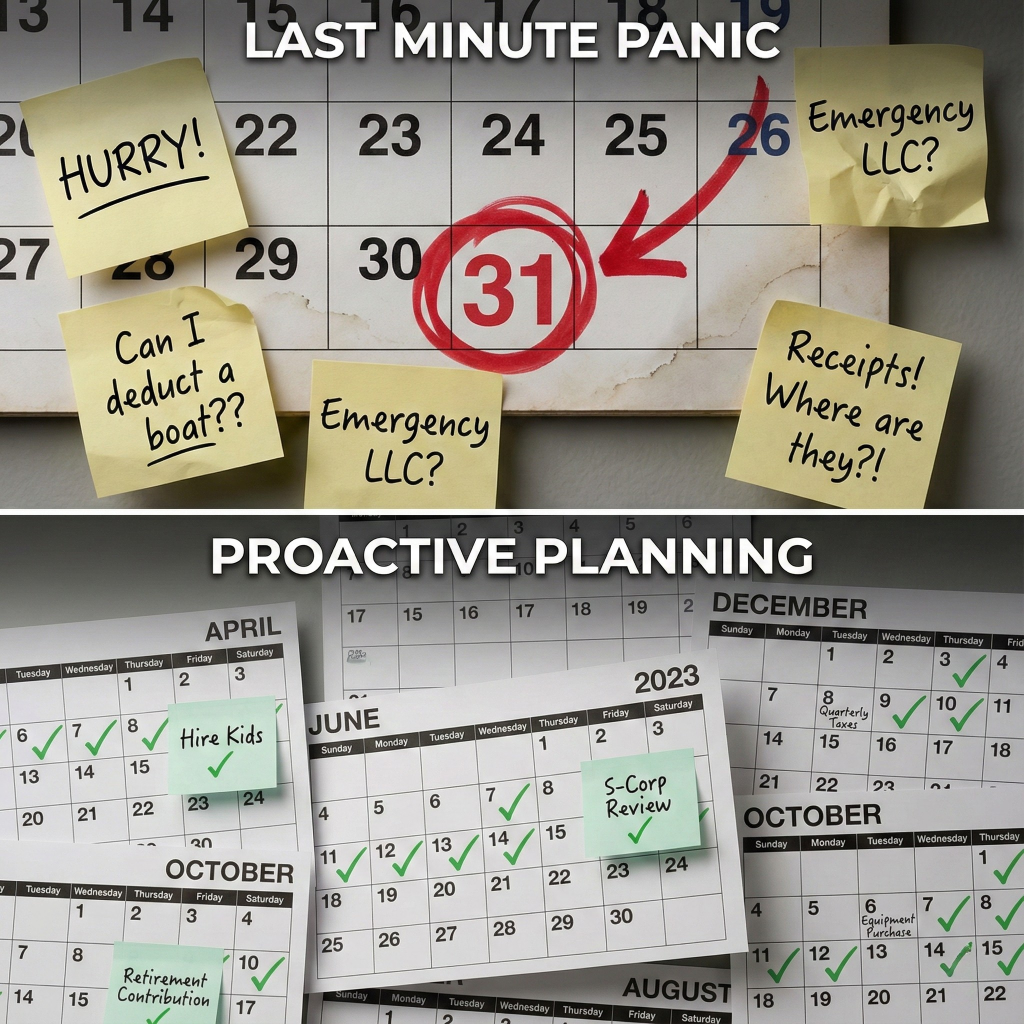
This is where you see how planning beats panic. The best clients aren’t scrambling on December 30, asking if buying a boat counts as a deduction. They’re the ones who treated the year like a process, not a surprise ending. They hired their kids early enough for it to matter. They set up retirement plans before the clock ran out. They understood their entity structure before the IRS did.
And yes, sometimes the solution really is small. A clean, accountable plan. A smart timing decision. A boring but powerful election. Just solid fundamentals that quietly work.
At the end of the special, Linus drops the blanket and reads the Christmas story. No jokes. No noise. Just clarity. That moment lands because it cuts through everything else. Good tax planning does the same thing. It replaces confusion with understanding. It swaps anxiety for control. It lets you stop doomscrolling deduction ideas and enjoy the holiday spirit.
So if 2025 felt chaotic, that doesn’t mean you failed. It means you’re human. The goal isn’t to “win” Christmas or beat the tax code into submission. The goal is to make thoughtful choices, with good advice, and build something that holds up when the ornaments come down. And if your plan feels a little sparse right now, that’s okay. Even the saddest little tree can turn out just fine with the right support. Just maybe call us earlier next year. Charlie Brown would agree.