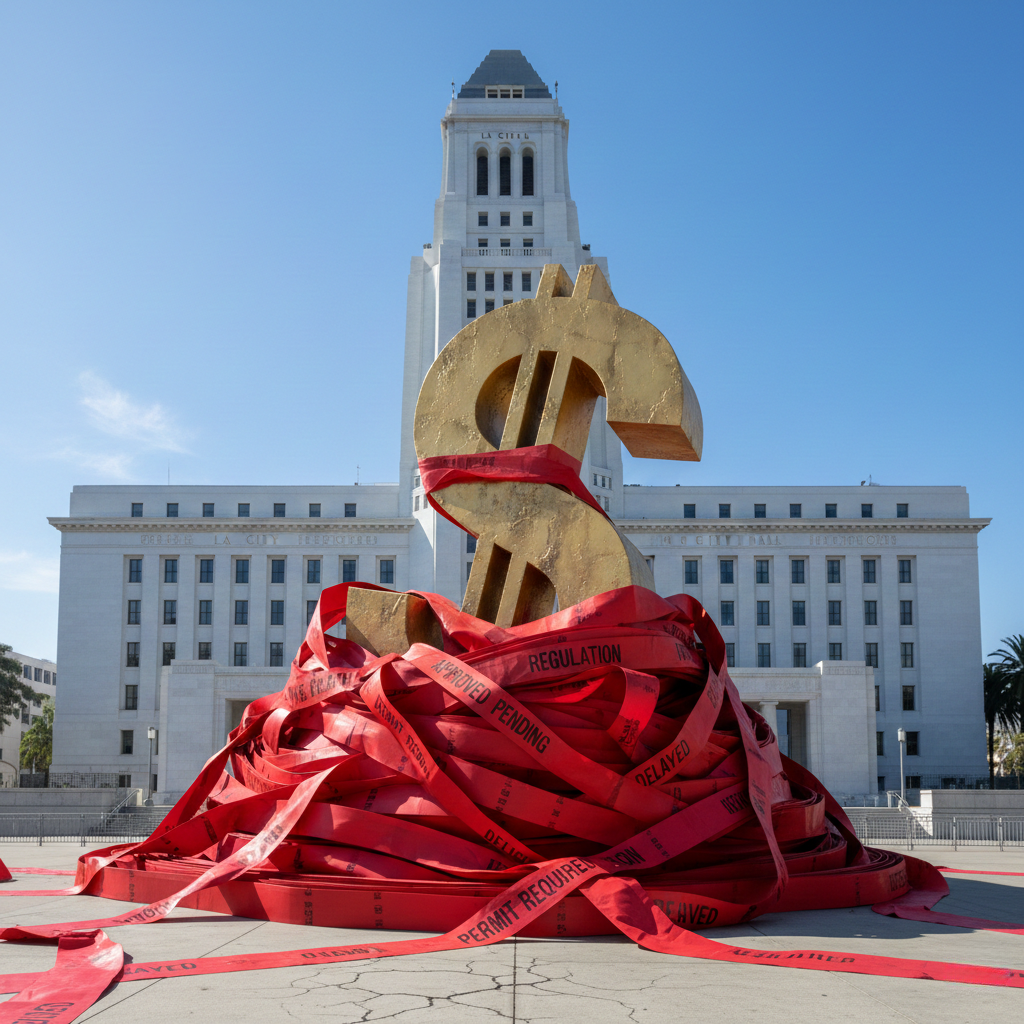
Los Angeles recently celebrated a milestone that sounds impressive until you read the fine print: its mansion tax has now raised roughly $1 billion since voters approved it. Champagne all around, right? Well, maybe hold the cork. Because according to reporting, less than 1 percent of that money has actually gone toward affordable housing — the very reason voters were told this tax existed in the first place. And now California is considering a new “billionaire tax” on assets over $1 billion, which is already driving wealthy residents like Google founders Sergey Brin and Larry Page to prepare out-of-state moves.
To be clear, this isn’t a story about rich homeowners versus everyone else. It’s a story about something far more universal: tax laws that sound great on a ballot and then wander off once the money shows up.
The pitch was simple. Tax high-end property sales ($5 million and up). Use that revenue to build housing. Reduce homelessness. Easy peasy. But in the real world, the money hit City Hall and promptly got stuck in a maze of approvals, planning studies, legal reviews, NIMBYism, and what bureaucrats lovingly call “implementation challenges.” Translation: the cash is sitting there, stretching, asking for a minute before it does anything productive.
This isn’t unique to Los Angeles. Governments everywhere are much better at collecting money than deploying it. Taxes get sold with a purpose. But once collected, they often melt into bureaucratic fondue. By the time funds reach their stated goal, years have passed, costs have ballooned, and the “responsible parties” have retired, been promoted, or changed departments.
Here’s why that matters. Tax systems run on more than statutes and penalties. They run on belief. When taxpayers hear “this tax will fix that problem” and then watch nothing get fixed, they don’t just question the tax. They question the whole system. Next time a shiny new tax proposal rolls out with promises and projections, voters remember the last one that didn’t deliver.
You don’t have to oppose the mansion tax to see the problem. You just have to be human. People are far more willing to pay taxes when they can see the goalposts moving. When they can’t, cynicism creeps in. And once taxpayers start assuming every tax is just a revenue grab wearing a virtue costume, compliance becomes grudging, trust erodes, and April 15 feels even more unfair.
The lesson here isn’t political. It’s practical. A tax that misses its own mission doesn’t just fail financially, it fails emotionally. And in a system that depends on voluntary compliance, that’s a far bigger problem than a line item sitting idle in a government account. In tax, as in life, it’s not enough to say what you’re going to do with the money. Eventually, you have to actually do it.
If this story gives you déjà vu, that’s because tax laws miss their targets more often than your favorite quarterback misses his wide receivers. And when taxes don’t do what they’re supposed to do, the people paying them are left wondering whether anyone’s coaching the team at all.
That’s where we come in. Before you assume new taxes should dictate where you live, invest, or sell, let’s slow down. Smart tax planning considers politics. But it focuses on how the system actually works, not how it was advertised on the ballot. If you want help navigating new taxes, give us a call. We can’t fix City Hall. But we can help you keep more of what you earn while staying on the right side of the law. After all, hope isn’t a tax strategy — but planning is.